Your Ad Here

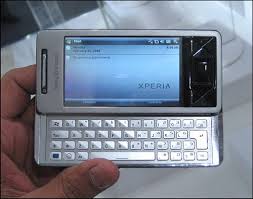
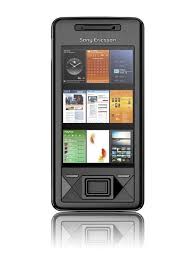
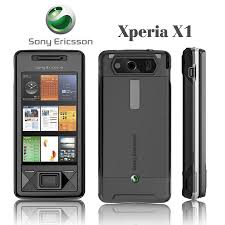
Sony Ericsson Xperia X1


Sony Ericsson Xperia X1 contains many features previously unseen in Sony Ericsson mobiles. Their earlier products in the smartphone segment have featured limited new ideas and have been tainted by the slow, somewhat illogical UIQ interface.


There's a good reason to mention the HTC Touch Pro, as both phones are more or less identical hardware-wise. The 'Sony Ericsson' Xperia X1 is being manufactured by HTC, though Sony Ericsson has gone to lengths to communicate that they have developed the phone without HTC:s input. Even so, it makes sense to compare the two, as both phones are based on Windows Mobile and also are in the same price range - at least on the Swedish market.


The best screen I've seen during the test is available for free download and is an adaptation of the SPB Mobile Shell; it simply shows everything the regular Windows interface does, but beefs up the size to facilitate use of your index finger instead of the stylus.
Screen:

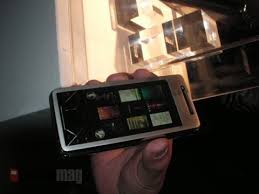
With a 800×480 VGA screen, you can’t really go wrong right? Right. We’ve got to say off the top that this is the best-looking screen we’ve ever seen on a Windows Mobile device. It puts all the others to shame. It’s not just that the screen has an amazing resolution, it’s that the screen is vibrant and clear as day. If your vision isn’t top notch you might have to increase the font size in settings because it gets a little small with that super high-res. Sunlight couldn’t phase it either as we had no problem using it on the go outside.

Audio quality

We didn’t put the speakers through our normal tests just yet to be honest. We tried a couple MP3s and they sounded good, not great. The speaker volume in general could have been a little louder and the sound could have sounded a little fuller. Speakerphone was the same. We’ll report back with more detailed findings.

Notification lights

If you’ve seen the Sidekick LX, you’ll know what we’re talking about. There are 4 independant notification lights on the four corners of the X1. These are LED lights that change through various colors. Unlike the Sidekick, you have complete control over the notification settings. Only want people to think you’ve got a UFO in your pocket when you’re getting a text message? No problem. There’s a lot to choose from to suit your own needs. The lights offer a nice touch and weren’t too over-powering and bright which we were afraid of. The kids will love it.

Call quality

Calls came in and out with crystal clear quality. The ear speaker was plently loud and the party on the other end said we sounded like we were on a land line.

Data Connectivity

Name something you’d like to see in a mobile device… HSDPA? Wi-Fi? GPS? The X1 has all of it. T-Mobile USA lovers will also be overjoyed at the fact that an AWS 1700MHz version is coming. Our unit had the 850MHz/1900MHz US 3G bands so we were rockin’ over HSDPA just fine. In fact, web browsing was abnormally fast. We didn’t find much of a difference between browsing over Wi-Fi or HSDPA. That’s probably due to the bottleneck of the phone in general, but it was a pleasant surprise.

Build quality

Another winner for Sony Ericsson. While the device isn’t the lightest phone on the market, we think it’s build quality is almost second-to-none. Maybe even iPhone status. It’s just so sturdy and well put together. We have to give HTC some mad props on this one. Could you please try and incorporate some of this newfound metal addition into some of your devices HTC? Please. The sliding mechanism was fantastic even though the device isn’t a normal “flat” slider. Major points for build quality.

Usability factor

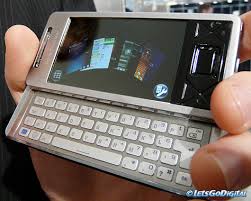
This could be subjective depending on your view of Windows Mobile, but we found the X1 to be on par or better than any Windows Mobile device we’ve used. Baring the keyboard issue, (see below) there wasn’t anything that hindered us from taking full advantage of the device. When closed, the device gives you access to all necessary shortcuts on the bottom front of the unit. Slide it open and you’ve got access to everything you could want. People have wrote us and asked about how it is to use the phone when the QWERTY keyboard doesn’t have directional keys, but they’ve overlooked something — the optical joystick. This works wonderfully well and doesn’t have a learning curve. It’s a natural extension of what we’ve been forced to use in the past. There was a “cursor” menu in settings but no cursor showed up on the screen. You also have full control over the sensitivity of the optical joystick. Making phone calls was comfortable and we didn’t have any issues with people hearing us or us hearing them.

Keyboard

The keyboard is a sensitive area for many people. Anyone who follows us know we take it very seriously — we put them all through the ringer! So, it pains us to report, that at least with our particular unit, the keyboard wasn’t great. It didn’t take time to get used to it, it just didnt perform like the way we had hoped. The reason is because the keys almost are completely flush with the case and don’t give good tactile feedback when pressed. Odly enough, the spacebar was actually ok. It faired the best out of all of them. We understand why there really is no travel in the keys — there is a huge sliding mechanism right over them — but we would have liked to see a little more feedback when typing. They have this triangular pattern on top which does make it easy to feel them, but you don’t get a good response when actually pressing them down. The backlight on the QWERTY ‘board successfully helped us find the keys when it was nightime, but that still didn’t help when typing. We said this before, but if we had to compare the keyboard to anything, it would be Sony’s UX-series computers. It’s the same exact thing.

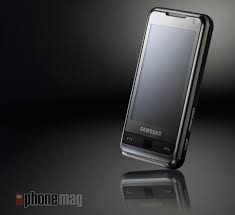
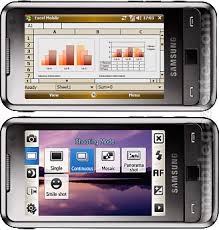
Samsung Omnia SCH-i910

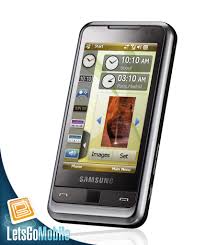
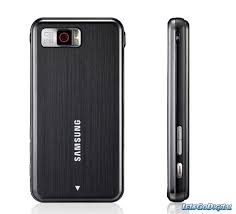
samsung omniaThe Samsung Omnia is the latest in Samsung's TouchWIZ phones for the global market, and also the most advanced


“The Window-Mobile 6.1 Samsung Omnia SCH-i910 is the best Verizon phone we’ve seen for photos, video recording, and Web browsing.”

However, it looks like there are some cons:

“Frustrating touch screen and accelerometer. No standard headphone jack. Video playback can be jerky”

I witnessed some of those frustrations myself when I played with the Omnia at the PDC. The concept is cool and the display is awesome but the overall performance was sluggish. Not sure if I’m a fan of widgets either…


The Samsung Omnia is the latest in Samsung's TouchWIZ phones for the global market, and also the most advanced, as that TouchWIZ interface here runs atop Windows Mobile 6.1 instead of a standard carrier OS. This idea of creating an overlay to improve Windows Mobile is all the rage right now, but instead of making things easier, the Samsung Omnia is more confusing and difficult to use. There are a few things this phone does well, including DivX movie playback and Web browsing, courtesy of Opera. But for the most part, there are better all-touch smartphone options for Verizon Wireless. All in all, we think the concept of TouchWIZ on multimedia phones works better than using the widget-based UI to turn a Windows Mobile phone into a multimedia powerhouse. There's no doubt about its potential, but eventually the overall experience left us feeling seriously annoyed

"The i900 is packed full of top-end features and presented to the user in a very good package...its specification is superior.(to the iPhone) My money would certainly go onto the i900 rather than the 3G iPhone."


The Omnia is a Windows Mobile 6.1 phone, so at the basic level, you know what you're getting. The difference between it and basically every other WinMo 6.1 phone lies in the TouchWiz UIcing that's been slathered on top, and the hardware. If you're doing a double-take after peeking Sammy's Behold for T-Mobile, we wouldn't blame you—the Omnia is kinda like the smartphone version of the Behold, since it's got an almost identical industrial design, the same TouchWiz UI and a 5MP camera.


Pros: Good Opera Web browser with cool 'upshifted' navigation. Fine camera with auto focus and loads of pixels.
Cons: TouchWIZ experience disappoints when running atop Windows Mobile. Confusing redundancies in the interface.

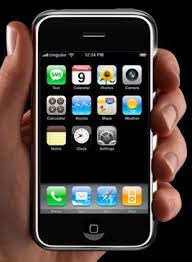
Apple Iphone


Features
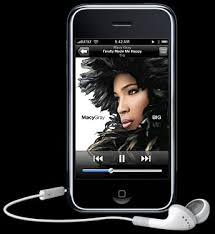
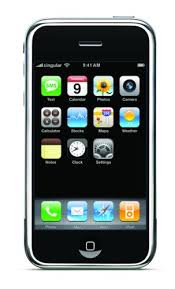
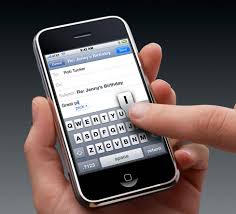
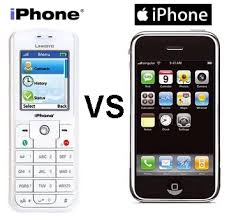
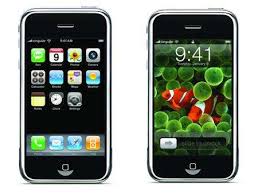
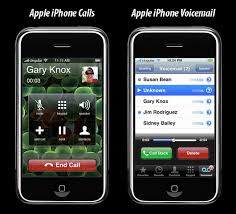
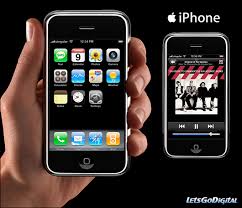
Introducing iPhone 3G. With fast 3G wireless technology, GPS mapping, support for enterprise features like Microsoft Exchange, and the new App Store, iPhone 3G puts even more features at your fingertips. And like the original iPhone, it combines three products in one � a revolutionary phone, a widescreen iPod, and a breakthrough Internet device with rich HTML email and a desktop-class web browser. iPhone 3G.

Specification

Display

  • 3.5-inch (diagonal) widescreen Multi-Touch display
  • 480-by-320-pixel resolution at 163 ppi
  • Support for display of multiple languages and characters simultaneously
Audio

  • Frequency response: 20Hz to 20,000Hz
  • Audio formats supported: AAC, Protected AAC, MP3, MP3 VBR, Audible (formats 2, 3, and 4), Apple Lossless, AIFF, and WAV
  • User-configurable maximum volume limit
Video

  • Video formats supported: H.264 video, up to 1.5 Mbps, 640 by 480 pixels, 30 frames per second, Low-Complexity version of the H.264 Baseline Profile with AAC-LC audio up to 160 Kbps, 48kHz, stereo audio in .m4v, .mp4, and .mov file formats; H.264 video, up to 2.5 Mbps, 640 by 480 pixels, 30 frames per second, Baseline Profile up to Level 3.0 with AAC-LC audio up to 160 Kbps, 48kHz, stereo audio in .m4v, .mp4, and .mov file formats; MPEG-4 video, up to 2.5 Mbps, 640 by 480 pixels, 30 frames per second, Simple Profile with AAC-LC audio up to 160 Kbps, 48kHz, stereo audio in .m4v, .mp4, and .mov file formats
Headphones

  • Stereo earphones with built-in microphone
  • Frequency response: 20Hz to 20,000Hz
  • Impedance: 32 ohms
Camera and photos

  • 2.0 megapixels Camera located on back of iPhone.
  • Photo geotagging
  • iPhone and third-party application integration
Sensors

  • Accelerometer
  • Proximity sensor
  • Ambient light sensor
Capacity

  • 8GB
Cellular and wireless

  • UMTS/HSDPA (850, 1900, 2100 MHz)
  • GSM/EDGE (850, 900, 1800, 1900 MHz)
  • Wi-Fi (802.11b/g)
  • Bluetooth 2.0 + EDR
GPS

  • Assisted GPS
Mac system requirements

  • Mac computer with USB 2.0 port
  • Mac OS X v10.4.10 or later
  • iTunes 7.7 or later
Windows system requirements

  • PC with USB 2.0 port
  • Windows Vista; or Windows XP Home or Professional with Service Pack 2 or later
  • iTunes 7.7 or later
Environmental requirements

  • Operating temperature: 32 to 95 F (0 to 35 C)
  • Nonoperating temperature: -4 to 113 F (-20 to 45 C)
  • Relative humidity: 5% to 95% noncondensing
  • Maximum operating altitude: 10,000 feet (3000 m)

Power and battery

  • Built-in rechargeable lithium-ion battery3
  • Charging via USB to computer system or power adapter

Talk time

  • Up to 5 hours on 3G
  • Up to 10 hours on 2G
  • Standby time: Up to 300 hours

Internet use

  • Up to 5 hours on 3G
  • Up to 6 hours on Wi-Fi7

Audio / Video Time

  • Video playback: Up to 7 hours8
  • Audio playback: Up to 24 hours9
Physical Description

Size and weight

  • Height: 4.5 inches (115.5 mm)
  • Width: 2.4 inches (62.1 mm)
  • Depth: 0.48 inch (12.3 mm)
  • Weight: 4.7 ounces (133 grams)

Specifications
Color Display Yes
Resolution 480 x 320
Frequency Band 850/900/1800/1900
Internal Memory 8GB
Expandable Memory No
Infrared No
Bluetooth Yes
GPRS Yes
Camera Phone Yes
Dual Camera No
Camera Pixel 2.0
Video Recorder Yes
MP3 Player Yes
FM Radio No
MMS Yes
WLAN/ Wi-Fi Yes
Web Browser Yes
3G Yes
USB Yes
Handsfree Speaker Yes
Talk Time Up to 10 h
Standby Time Up to 300 h
Dimension 115.5 x 62.1 x 12.3 mm
Weight 133 g
EDGE Yes
Touch Screen Yes
Full Keyboard No
Camera Flash No
GPS Yes