
Nokia N96 Review
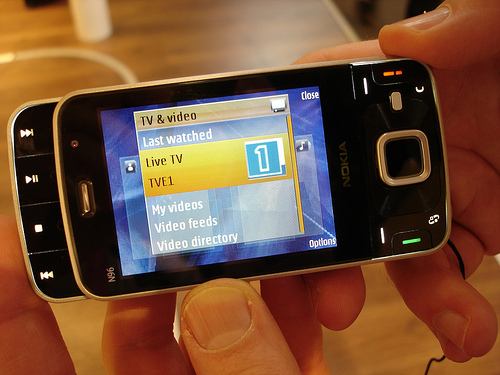
Nokia N96 is the latest Nseries devices released by Nokia. It can be considered as a successor of the Nokia N95 as it shares many features with the Nokia N95. The nokia N96 however focusses more on TV and Video capabilities.
Rafe of AllAboutSymbian has recently posted an detailed review of the Nokia N96. Here are a few important points:
General Design and Hardware
The N96’s overall design and styling is very similar to that of the N81, but there are elements of the N95, N82 and N81 in the design too. The overall impression is that of polished, flat surfaces with silver highlights. The N96, at least subjectively, looks and feels like a high end device and this should improve the device’s appeal among style conscious users. At 103 x 55 x 18 mm, the N96 is relatively large, but much of that is necessary to accommodate the large 2.8inch screen. It is marginally longer and wider than the N95, but very slightly thinner. The back of the device, which is dominated by the five megapixel camera, uses a similar material to that of the N82 which is less prone to finger prints and has an attractive ridged pattern embedded within it.Connectivity
Connectivity is comprehensive, with quad band GSM, dual band WCDMA (900/2100) and WiFi, together with Bluetooth and the aforementioned USB for local connectivity. USB performance has been greatly improved on the N96; the current prototype is five times faster than previous Nseries models and Nokia hope to improve this further in the production model. UPnP functionality, used for connecting media device over a home network, has been updated in the N96. The Home network application now offers bi-directional sync with a designated UPnP Media server.
DVB-H - Mobile TV
The lead feature for N96 is the inclusion of DVB-H for receiving mobile TV. DVB-H is a superset of DVB-T technology but is designed for use in mobile and handheld devices. DVB-H is a broadcast (multicast) technology and is able to provide higher quality pictures.
GPS and Nokia Maps 2.0
The N96 will ship with Nokia Maps 2.0, currently in beta, on board. Maps 2.0 brings a number of new features, such as a dedicated pedestrian mode, improved mapping, satellite imagery and revamped city guides.
Multimedia
The N96 has a 5 megapixel camera with auto-focus and Carl Zeiss optics; it should produce similar results to other 5 megapixel Nseries devices. Accompanying the camera is a dual LED flash. A Xenon flash, which is the main alternative, might give superior still images in low light conditions, but is unable to provide continuous illumination during video capture.
The N96 has excellent video playback attributes. It supports an array of formats, including H.264 at VGA (640×480) resolutions at 30 frames per second. A notable addition is support for Windows Media Video (version 9) at CIF (352×288). Flash video is also supported, thanks to the inclusion of Flash Lite 3 – its main use will be in the web browser on sites like YouTube.
The standard Nseries Music player and Podcasting applications are present, as is the Nokia Music store.
The usual FM radio is also present, but new is its support for RDS (Radio Data System), which is typically used to display the radio station’s name and the current song or programme name. Nokia’s recently announced Internet radio application, for listening to radio streams via the Internet, is present and is integrated into the multimedia menu. It adds yet another audio/music feature to the N96’s multimedia department and, bitrate permitting, can out perform the FM radio (and doesn’t need an aerial). The usual Nseries audio output options are all present with a choice of 3.5mm audio jack (headphones or TV-out), stereo audio Bluetooth (A2DP/AVRCP) or the integrated stereo speakers.
Software
The N96 runs S60 3rd Edition Feature Pack 2. The usual suspects, such as Calendar, Messaging and Contacts, are present with some small updates here thanks to Feature Pack 2. Contacts now integrates SIM contacts into the main contacts store, Messaging has a unified editor for SMS and MMS (the phone decides what type to use based on the content of the message). With 128MB of RAM on board, the N96 should have no problems with multi-tasking. In use, the speed of operation was comparable with other recent Nseries devices
Technical
Battery
The N96 has a BL-5F 950 mAh battery – the same as the N95, but a step down from the 1200 mAh battery of the N95 8GB. Nokia said that considerable effort has gone into improving power management and the technical changes mentioned below would support this.
Video and audio performance
The N96’s hardware video acceleration supports H.264 video (previous Nseries used software decoding for this). This results in improved video performance (higher bitrates can now be played back smoothly) and reduces power requirements during playback. This means that the N96 has a longer video playback time than earlier Nseries models. H.264 has other benefits too - it is more efficient than earlier standards (able to achieve good quality video at lower bit rates).
The N96 also has a dedicated DSP (digital signal processing) chip, which gives improved audio performance and uses less power (N96: 12 hours playback; N95: 10 hours). The DSP chip converts audio signals from digital to analog and vice versa.
One area where the lack of 3D graphics acceleration might be relevant is gaming. However, even this is debateable
In considering the chipset and technology in the N96, remember that it is first and foremost a video and mobile TV focussed phone. Thus, Nokia have chosen to use the solution that fits best for the market positioning of this device. While some power users may get agitated over the chipset used in a given device, the reality is that it is the experience for the consumer that really matters, not the technical implementation.
Conclusion
As one of Nokia’s flagship devices, the N96 will deservedly receive a lot of attention from the media and consumers. It is inevitable, thanks to its looks and its model number, that the N96 gets compared to the N95 or is referred to as its successor. However, this is a mistaken attitude – the N96 should, at best, be seen as the video and TV focussed version of the N95. The N96 is to the N95 as the N77 was to the N73 –a sister device.
Check out the complete review here
Nokia has recently announced the successor of Nokia N95, the Nokia N96.
Specifications:
Support for digital television (DVB-H ).
16GB of internal memory + support for Micro SD cards
Support for WMV videos and DivX video
5 MP camera
N-Gage gaming Platform
16GB Internal Memory
Expected Price: 800$
Expected Availablity: 2nd Quarter 2008


 Simply locking your screen or switching to 'suspend' or 'hibernate' mode will not provide adequate protection




